
Hungry World Farm · October 1-4, 2026
SCAI 2026
Full Conference Report
Faith, food, farming, and community
Seven recorded conversations, tours and walks, and a closing Sunday sermon.
Faith, food, farming, and community · Sustainable Christian Agriculture Conference · October 1-4, 2026 · Hungry World Farm, Tiskilwa, Illinois
The seven recorded sessions from the Sustainable Christian Agriculture Conference explore how Christian faith shapes food growing, environmental care, and community life.
The sessions return to a practical conclusion: caring for land depends on relationships and on the conditions that allow people to keep doing the work. A rain garden needs community trust. A farm needs viable sales and manageable labor. Affordable food needs processing, distribution, and purchasing arrangements. Faith is expressed through these decisions as well as through worship and theological reflection.
This report offers an entry point for readers who cannot watch every recording. Each recorded-session section includes the video, a summary, selected figures, brief quotations, and questions for discussion. The report also includes accounts of the conference tours and walks.
The figures below are speaker-reported examples, not independently audited results.
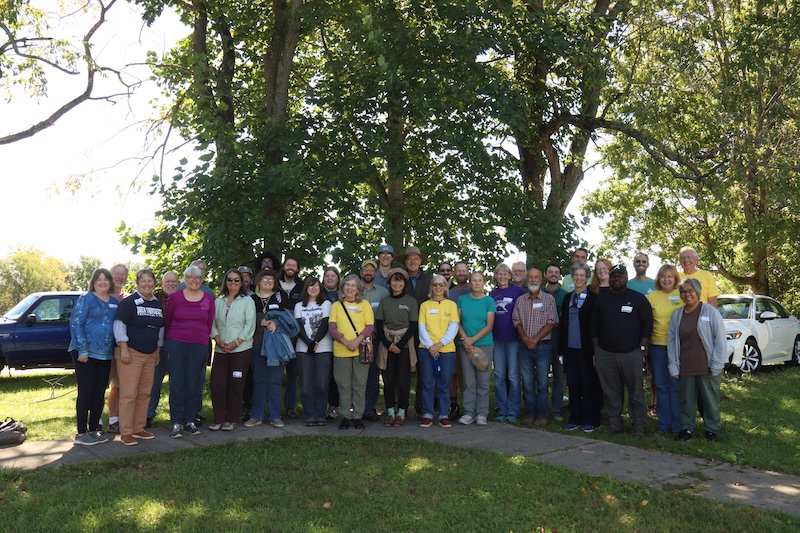
Themes across the sessions
Relationships shape ecological care
Watersheds, soil communities, shared meals, and farmer groups connect people and places. Participants describe repair as a practice of listening and responsibility.
Economic access matters
The cost of land, labor, food, processing, and accommodation shapes what people can do. Premium markets, shared purchasing, and service programs offer different responses.
Learning needs a place and a community
Gardens, field observations, demonstrations, and repeated conversations help people move from ideas into practice. Participants also acknowledge uncertainty and the need to keep learning.
Saturday, October 3 · 2:15-3:45 pm · Featured presentation
Reconciliation Ecology and the Communities of a Watershed
Gail Gunst Heffner and David P. Warners · Calvin University and Plaster Creek Stewards
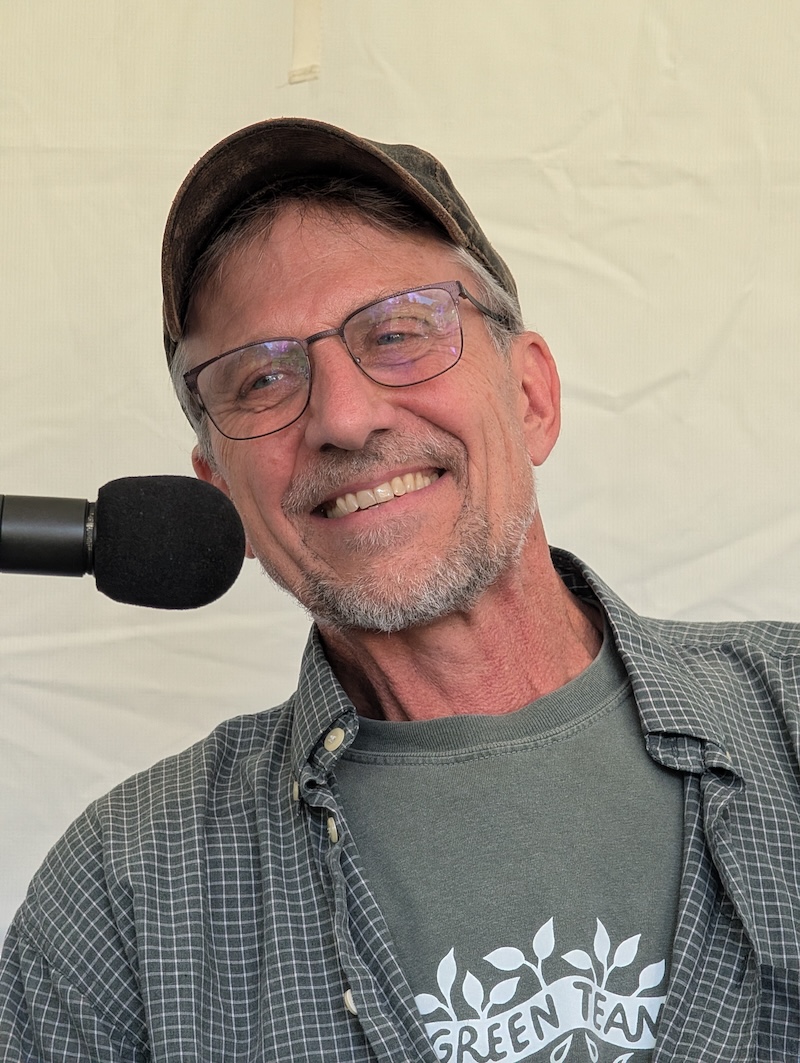
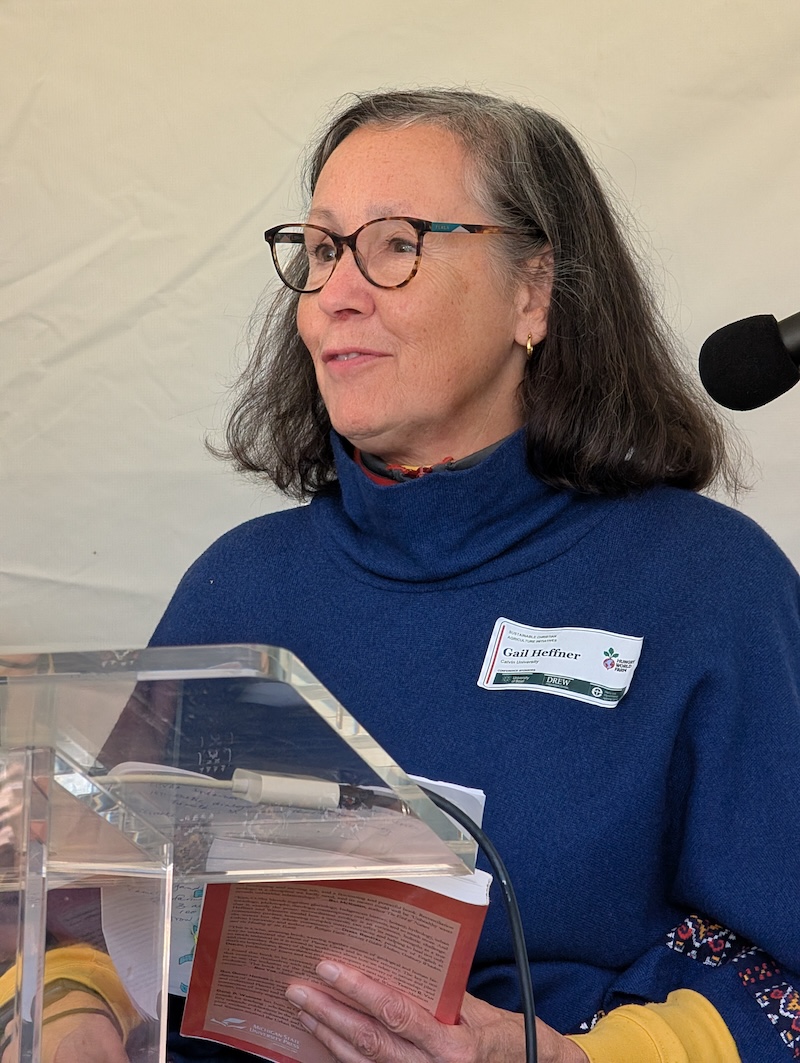
What does it mean to care for a creek when the practices damaging it are woven into everyday life? Gail Heffner and Dave Warners begin with an uncomfortable discovery: the watershed connecting their university, churches, and homes drained into a severely contaminated waterway. Christian convictions about creation had not protected the place where they lived. Their response became Plaster Creek Stewards, an initiative linking education, research, and restoration.
They describe a watershed as an area of land that drains to a common point. That physical connection creates obligations among people who may never meet. Rain carries the effects of decisions made on farms, streets, lawns, and parking lots toward downstream neighbors. Buried streams and storm drains can hide these relationships. Learning where water goes helps make responsibility visible.
The speakers argue that lasting ecological repair also requires truth about a place’s history. They recount how a waterfall shown to a missionary by an Indigenous leader became a site of gypsum extraction and environmental damage. They connect the treatment of Indigenous communities with present patterns of pollution and flooding. Their approach asks whose knowledge has been respected, whose stories have been omitted, and who has borne the costs of decisions made elsewhere.
Reconciliation begins, in their account, with recognizing harm, acknowledging participation in it, and undertaking concrete repair. Oral histories and community relationships inform the work. Indigenous knowledge is approached through ongoing relationships and listening. The speakers resist the assumption that technical expertise alone is enough to make a project welcome.
The examples are practical. Curbside rain gardens divert runoff into planted basins. Native vegetation provides habitat and encourages water to enter the ground. Campus projects reshape portions of landscaped and paved areas. Floodplain restoration gives rising water room to spread and slow. Participants learn why the projects matter and then help carry them out, connecting explanation with action.
A closing account of opposition makes the social lesson clear. A proposed restoration encountered resistance and a lengthy appeal. A formerly resistant neighbor later expressed gratitude for the completed work. The speakers acknowledge that they should have listened more effectively at the outset. Restoring a watershed includes the slower work of building trust among the people who share it.
Selected figures from the session
- 2009: Launch year reported for Plaster Creek Stewards. 3:14
- 200 trees and 75,000 plants: Reported planting scale of the featured restoration project, carried out over about a year and a half. 43:53
- Two years: Appeal delay described before the contested restoration project proceeded. 1:28:35
Words from the session
“We have to lead by listening.”
“We share this watershed.”
“We’re waiting for the walleye to show up.”
A moment of humor
The conversation about a creek name associated with walleye becomes a joke about waiting for the fish themselves to return.
Questions for discussion
- Where does water from our property go, and who lives downstream?
- Whose account of this place would change how we understand its history?
Putting the discussion into practice
Begin with the actual watershed and the people connected by it. Pair practical restoration with education, historical listening, and relationships that can continue after a planting day.
Saturday, October 3 · 11:30 am-1:00 pm · Featured presentation
Seeing Soil Health Through Water and Living Structure
Steve Long · With contributions from participants
How much of a rainfall actually stays on a farm? Steve Long uses that question to introduce soil health. Measuring rain is only the beginning. What happens when it reaches the ground depends on soil structure, living roots, and the spaces through which water can move.
He explains soil aggregates as groups of particles held together in a structure that creates pore space. Familiar comparisons make the idea accessible: water moves differently through marbles and sand, and flour behaves differently from bread. A shovel lets a farmer examine roots, smell, and structure directly. Long encourages observation alongside formal testing.
Four processes organize the demonstration: photosynthesis, the water cycle, nutrient cycling, and biodiversity. Plants capture energy from sunlight. Water supports the organisms involved in making nutrients available. Biological diversity helps these relationships function. Long emphasizes microbial partners when explaining nitrogen fixation and asks what is lost when land remains bare.
The rain simulator compares samples from a forest, grazed pasture, a field using no-till and cover crops, and more disturbed ground. Differences in runoff and infiltration give the audience a visible way to discuss management. Long recognizes progress in the cover-cropped sample while acknowledging that practices and conditions differ among the samples.
The demonstration also produces surprises. The forest sample sheds more water than expected, the soils are already wet, and an accidental deluge complicates a step. Participants raise questions about texture, saturation, disturbance, and forest age. Those observations matter: the demonstration illustrates processes, but does not establish a universal ranking or a precise effect size.
Later tests show whether immersed soil holds together and how agitation changes the water around it. Long recommends inexpensive comparisons between a field and nearby less-disturbed ground. His theological reflections connect land management with downstream neighbors and with creation’s capacity to provide food and water. The session makes soil observation approachable, while leaving room to question results and test explanations.
Selected figures from the session
- 1.6 inches: Equivalent simulated rainfall described for the first test. 27:49
- About $1,000 and $6,000: Estimated costs of a small demonstration unit and a larger simulator; Long also describes inexpensive homemade alternatives. 43:29
Words from the session
“the biodiversity is the software of the planet.”
“We have an infiltration problem.”
“I am not Ray Archuleta.”
A moment of humor
Long opens with an ongoing joke about being mistaken for Ray Archuleta. Around 36:33, a mishap changes gentle simulated rain into a flood and gives the audience a memorable demonstration of why method matters.
Questions for discussion
- What changes when we compare our field with nearby soil that has been less disturbed?
- How could we repeat a simple test while keeping soil type and starting moisture comparable?
Putting the discussion into practice
Use simple observation to develop better questions about the land. Repeat demonstrations carefully and consider sample conditions before drawing broad conclusions.
More from the Conference: In Program Order
The remaining recorded sessions, tours, and walks follow the conference program, beginning on Friday morning. The two Friday afternoon farm tours shared the same scheduled time.
The SCAI conference continued beyond the presentations, with opportunities to explore Hungry World Farm’s prairie, pasture, and woods. These gatherings connected the conference’s conversations about stewardship with particular places and with the people who care for them.
Friday, October 2 · 9:30-10:45 am
Regenerative Agriculture in a Japanese Christian Community
Raymond Epp and Akiko Aratani · Menno Village, Hokkaido, Japan
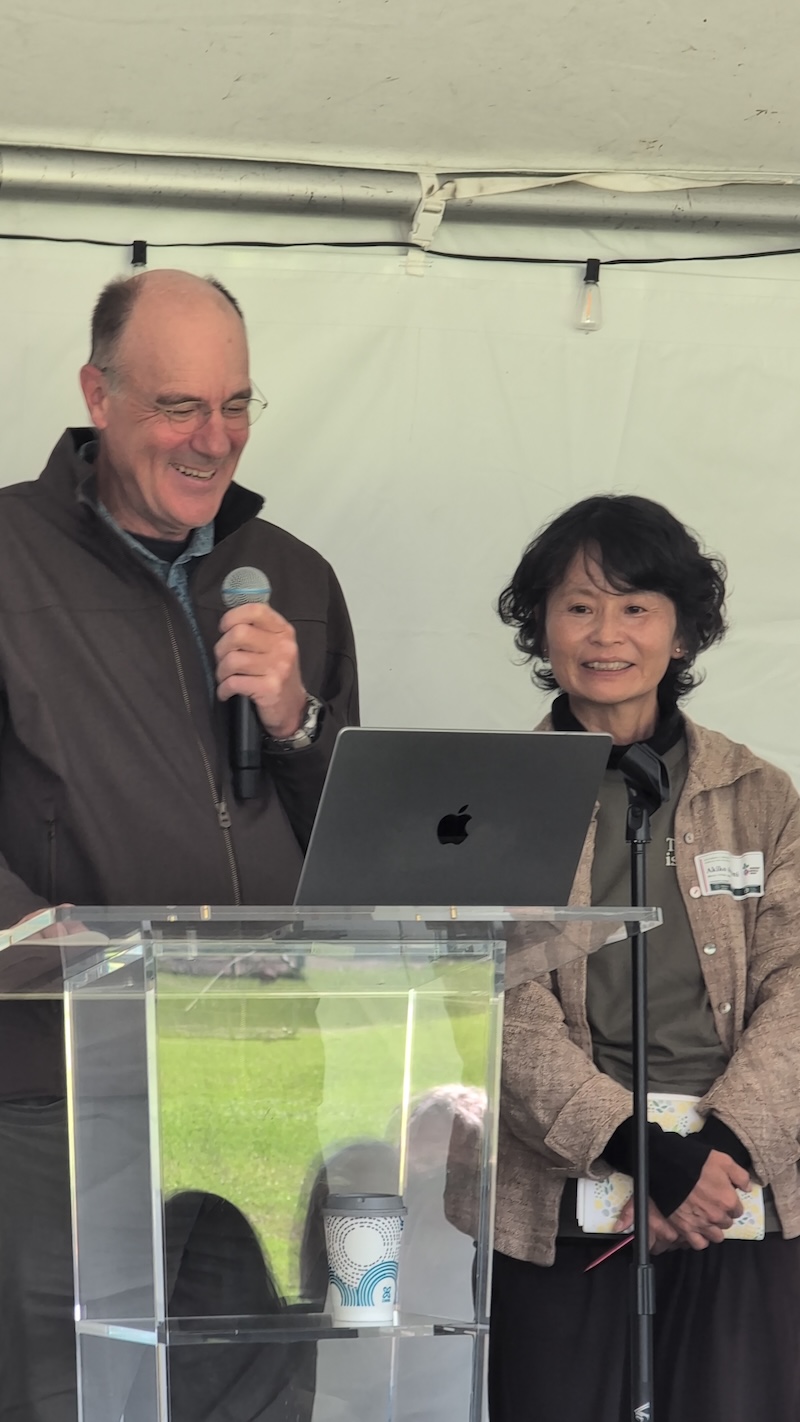
Ray Epp’s account begins with the Manitoba farm crisis, when economic distress affected farmers, families, and rural communities. A church-supported response led him to ask how food could reach consumers while giving farmers a fair price and workers a living wage. A bakery purchasing grain directly from farmers offered one practical way to reconnect the farm and the table.
That experience shapes his approach to regenerative agriculture in Japan. Epp asks what faith looks like when it becomes visible through work, food, and relationships. He describes learning to communicate his convictions through daily life before he could express them fluently in Japanese. Church structures, in his view, should help a community participate in God’s reconciling work.
His farm examples draw on processes already present in the land. Sheep provide grazing and wool for insulation. Wood-chip compost produces heat and material for the garden. Diverse cover crops support livestock and soil life. A no-dig garden reduces the burden of cultivation. A locally built roller crimper and a cover-crop seed business respond to tools and materials that farmers need.
Education spreads through films, demonstrations, and repeated conversation. Epp describes Japanese screenings of To Which We Belong and a learning community in which farmers investigate soil together. Digging, observing roots, and learning the names of organisms make the land more interesting. The aim is to help participants ask better questions and share what they discover.
Akiko Aratani adds a story about researchers visiting the farm. Hospitality and a conversation about what they were seeing opened a wider discussion of mindset and faith. She describes farmers discovering a place where questions and difficulties can be shared without embarrassment. The community supports learning as well as companionship.
The scientific discussion includes strong claims about soil carbon and climate change. Those claims would need supporting studies, explicit units, and defined conditions before being used as established findings. The clearest documented contribution of this session is the community’s practical experimentation and reported experience. For farmers considering a transition, Epp’s advice is to find mentors and peers so that the learning does not depend on one isolated farm.
Selected figures from the session
- 60%: Reported reduction in the household fuel bill after sheep-wool insulation. 39:09
- 500 locations and more than 15,000 viewers: Reported reach of Japanese screenings of To Which We Belong. 46:49
- About 80 participants over three years: Reported participation in the farmer learning journey. 48:04
- 70-80% lower fertilizer expenses: Experience Epp describes at Grant Sims’s 3,500-hectare farm; an individual case rather than a controlled comparison. 55:47
Words from the session
“We are not meant to be enslaved to structures.”
“Salvation begins today.”
“So our plants are not even vegetarian.”
A moment of humor
Epp’s discussion of plants and bacteria leads to a joke about plants failing to qualify as vegetarians. At 45:00, a question about a gap in a meeting circle becomes an affectionate exchange about practical access and spiritual meaning.
Questions for discussion
- What useful material or service could our community produce from resources already nearby?
- Who could help us compare experiments and learn from mistakes over several seasons?
Putting the discussion into practice
Build a community of observation and exchange around practical work. Hospitality, accessible tools, and repeated opportunities to learn help people participate.
Friday, October 2 · 11:15 am-12:30 pm
Daisy Hill Nature Preserve
With Ellen Starr and Dennis Zehr
Ellen Starr and Dennis Zehr led conference participants on a tour of Daisy Hill, a rare remnant hillside prairie in the Big Bureau Creek Valley. This small landscape offers a close look at the patient, ongoing work of protecting native plant communities.
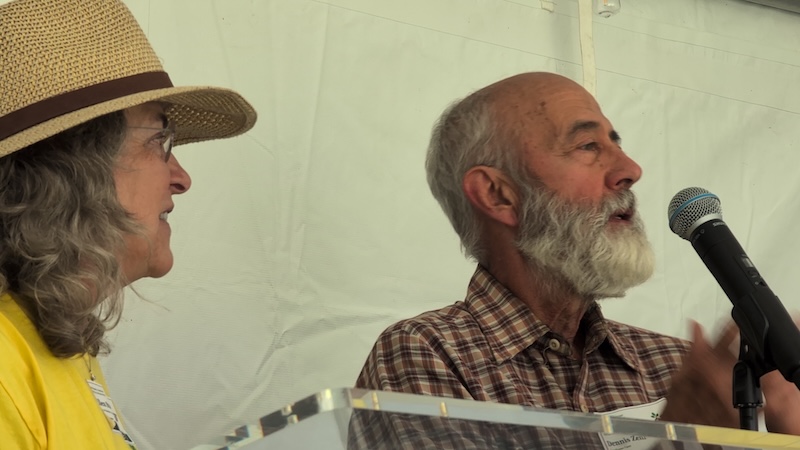
Daisy Hill’s 2024-2029 preservation plan encompasses 1.78 acres of prairie and surrounding woodland. It distinguishes three areas with different needs: a high-quality prairie remnant to protect, recovering prairie to restore, and an upland forest buffer to maintain. Together, they illustrate why caring for a landscape requires attention to its particular conditions.
The plan combines careful invasive plant removal, native seed collection and planting, and prescribed fire. In the most sensitive remnant, management calls for removing invasive plants by hand and keeping the area herbicide-free. Other areas allow targeted treatments to support recovery. Species highlighted in the preservation materials include pale purple coneflower, little bluestem, and sideoats grama; management targets include autumn olive, bush honeysuckle, and garlic mustard.
The tour offered a setting for considering conservation at an intimate scale. Protecting a prairie means learning what is already there, recognizing what threatens it, and returning to care for it over time.
Friday, October 2 · 2:00-3:15 pm
Making a Farm and Its Ministry Financially Sustainable
Brent Barry · Stout Creek Farm | Sarah Macias · Sister Grove Farm
A farm can carry a meaningful mission and still struggle to pay its bills. Brent Barry and Sarah Macias address that tension through two distinct enterprises. Barry emphasizes livestock, vegetables, and direct sales. Macias combines agricultural activity with accommodation, retreats, and gatherings. Both describe finances as part of the responsibility of caring for land, workers, and family.
Their farms grew out of personal and vocational transitions. Farming offered a place to rebuild daily life and relationships, while theological study helped Macias imagine ministry beyond a conventional setting. The panel treats vocation as a way of living with a place and its community. It also recognizes the risks of creating work that consumes all of a family’s time and energy.
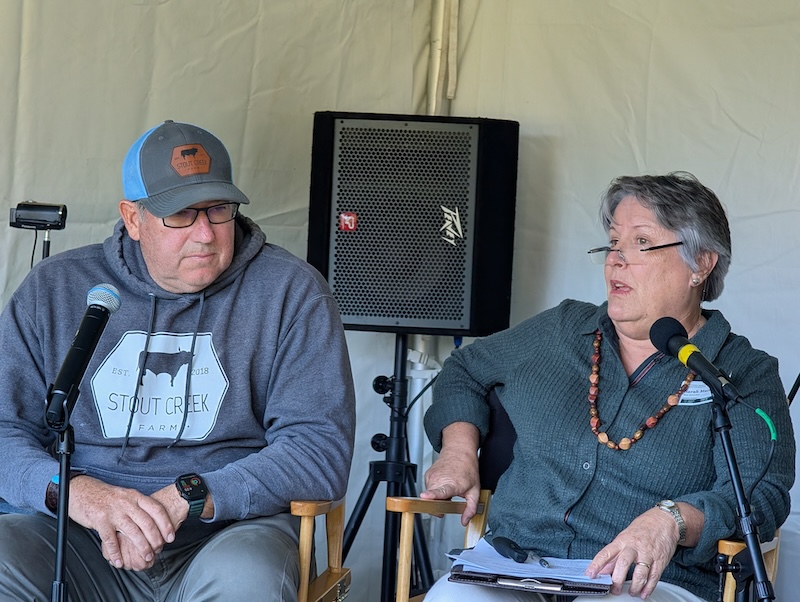
Barry explains that relationships and the quality of life on the farm come first. He describes paying workers fairly, helping with housing, sharing meals, and communicating with respect. Those practices support a stable team. Macias organizes decisions around restoration, education, and inspiration. Renovating a farmhouse, creating places for guests, and welcoming groups allow the property to serve family and community.
The business discussion is concrete. Barry describes farmers markets, winter pop-ups hosted by a church, restaurant relationships, farm visits, and cooking demonstrations. He compares the short production cycle of broiler chickens with the much longer cycle of grass-finished cattle. Enterprise choice therefore affects how much capital a farm needs and how long it must wait for sales.
Macias says accommodation and rentals are the main financial support for Sister Grove Farm. Seasonal gatherings and retreats create opportunities to learn, eat, and reflect together. Their popularity suggests demand for experiences that connect people with a place. The agricultural and hospitality activities can support one another, although both require labor and attention.
The speakers also describe exhaustion, borrowing, ambitious plans, and the emotional histories people bring to money. Macias is considering succession with her family and a young farmer. Barry explains how mission and business decisions sometimes require difficult choices. Their examples show that financial sustainability depends on context: customers, prices, labor, capital, and a family’s priorities. The sales figures in the session describe revenue, not profit.
Selected figures from the session
- $7,000-$10,000 each Saturday and about $450,000 per year: Reported farmers-market sales and annual revenue. Costs and net profit were not supplied. 20:53
- 8-10 weeks versus 30-32 months: Broiler turnaround compared with grass-finished cattle in Barry’s operation. 32:30
- At least 10%: Food reserved for a local food bank; the measurement basis was not specified. 43:04
- 12 cows and 75 laying hens: Macias’s reported livestock scale. 47:45
Words from the session
“We do not want to go broke.”
“grace finds us.”
“What’s a weekend?”
A moment of humor
At 38:28, Barry recalls speaking at a Sister Grove event and still paying to attend. Around 1:05:48, his story about singing to turkeys turns into an account of the birds responding to the Beatles.
Questions for discussion
- Which activity actually pays our bills, and what does it cost in labor and energy?
- What would a successful transfer of responsibility look like for our family, workers, and land?
Putting the discussion into practice
Name the mission clearly, understand cash flow, and choose enterprises that fit the people doing the work. Include succession and rest in the business conversation.
Friday, October 2 · 3:30-5:00 pm · Concurrent farm tours
Livestock, Managed Grazing, and Silvopasture
With James Nicholson
Out in the pasture, James Nicholson introduced participants to Hungry World Farm’s livestock operation, grazing management plan, and developing silvopasture project. The setting brought the relationships among animals, forage, trees, soil, and water into view within the farm’s broader work of regenerating its 175 acres.
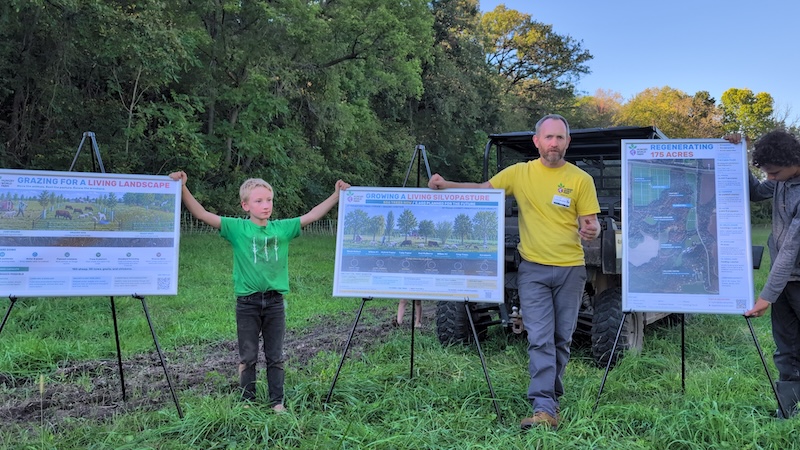
The grazing plan provides a framework for moving livestock through smaller paddocks and allowing grazed areas time to recover. Planned fencing, lanes, and water infrastructure will make those movements more practical and give the farm greater flexibility as forage, weather, and animal needs change. The aim is to support livestock while maintaining productive pasture and protecting the land that sustains them.
Silvopasture adds a longer horizon to that work by bringing trees, forage, and grazing animals together in a deliberately managed system. The project envisions tree rows within working pasture, with young trees protected as they establish. Over time, those trees can provide shade and shelter for livestock, add wildlife habitat, and create possibilities for future tree crops and farm income.
James’s pasture talk connected everyday animal care with the planning behind a more resilient farm. Paddock moves, reliable water, pasture recovery, and tree establishment are practical parts of the same undertaking: producing food while caring for the living landscape.
Friday, October 2 · 3:30-5:00 pm · Concurrent farm tours
Forest and Plant Walk
With Heather Munn
Heather Munn’s forest and plant walk unfolded through discovery. As the group wandered, Heather stopped when she recognized a plant and shared what she knew: its identity, whether it was native or invasive, its traditional uses, or another detail that invited a closer look. Participants added their own memories and knowledge, giving the walk the easy rhythm of a shared conversation.
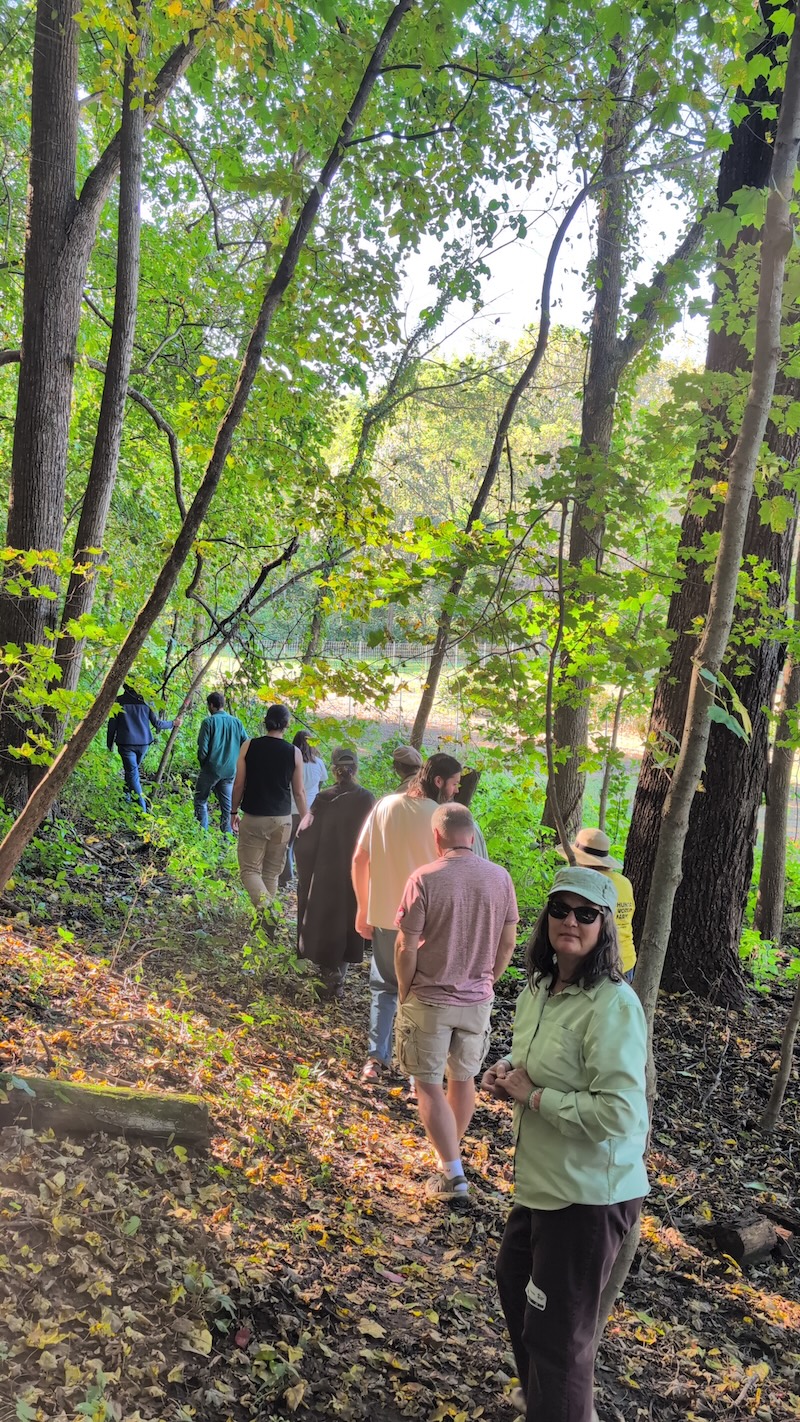
Plants recalled from the walk included milkweed, slippery elm, white and red oak, honeysuckle, pokeberry, nettle, greenbrier, and thistle. Mushrooms also became part of the conversation, with participants contributing observations about yellow oyster mushrooms, dryad’s saddle, and turkey tail. Each encounter offered another reason to pause.
Underlying those exchanges was Heather’s invitation to approach plants with the appreciation we might bring to a friend. Learning a name or recognizing a useful property can begin a relationship, but understanding also grows through time spent observing: noticing a plant’s shape, surroundings, and whole presence.
That perspective gave the walk its distinctive character. There was room for questions, shared stories, and quiet attention, without needing to turn every encounter into a lesson about usefulness. Participants were invited to become more attentive to the lives around them and to discover what patient familiarity with a place can teach.
Friday, October 2 · 5:15-6:15 pm
Farming as a Daily Practice of Christian Faith
Fredando Jackson · Jacob Landis · Steve Graham · Laurel Kearns · Jonathan Schramm · Eric Fitts
The panel brings together community food work, family organic farming, housing ministry, theological education, environmental teaching, and a Catholic service community. Each setting offers a different answer to how Christian faith takes shape in agricultural practice.
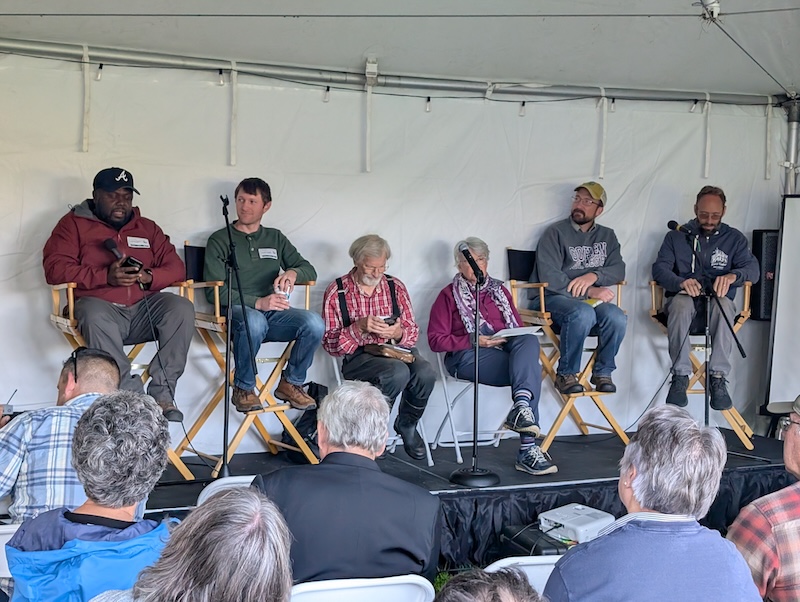
Fredando Jackson, known as Farmer Fredo, describes tending land, people, and community. At Koinonia Farm, shared labor, meals, and moments of silence give daily work a spiritual rhythm. Flint River Fresh connects farmers with schools, clinics, and local partners. Growing food becomes part of helping people belong and obtain what they need.
Jacob Landis asks why Christian identity does not more often influence the way farms are managed. His family initially moved toward organic farming for economic reasons and later recognized connections with faith and environmental care. He describes both continuing discovery and the practical frustrations of certification. Steve Graham approaches sustainability through intentional community, housing, food growing, and sharing meals.
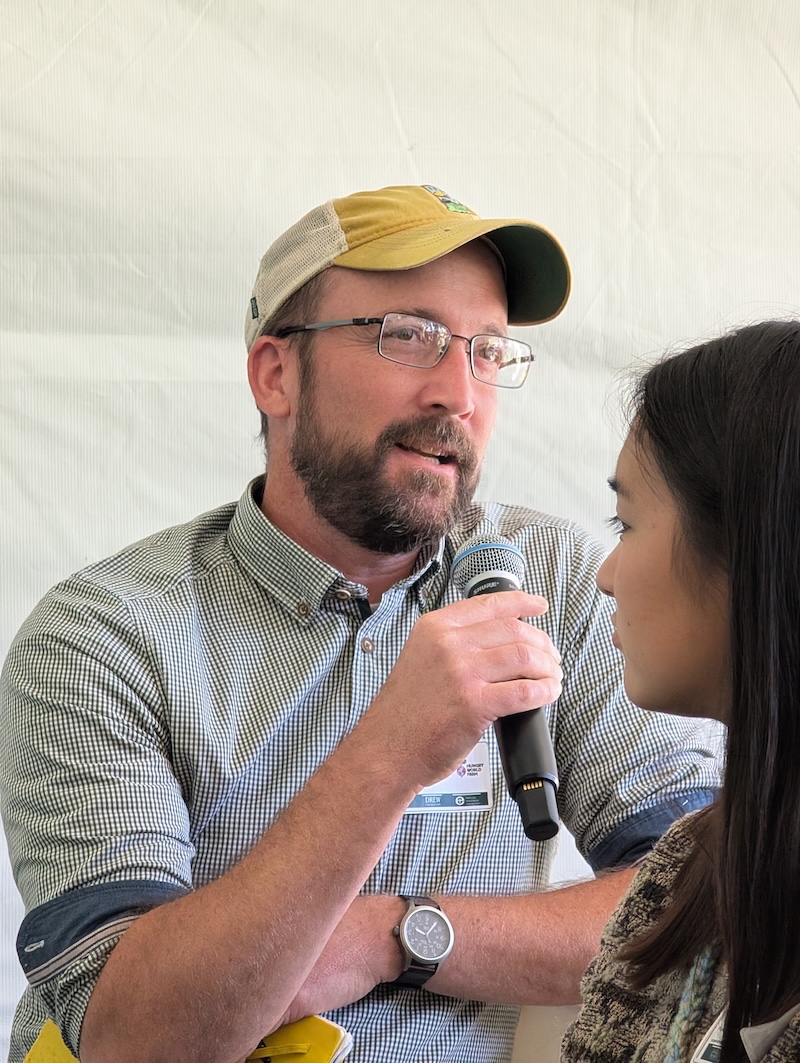
Laurel Kearns connects farming with theological education. She asks students to consider the food and labor involved in communion and to learn from a place through gardening and quiet observation. Jonathan Schramm emphasizes attachment to creation as a foundation for responsibility. Students need to encounter beauty and people doing useful work, alongside understanding environmental damage.
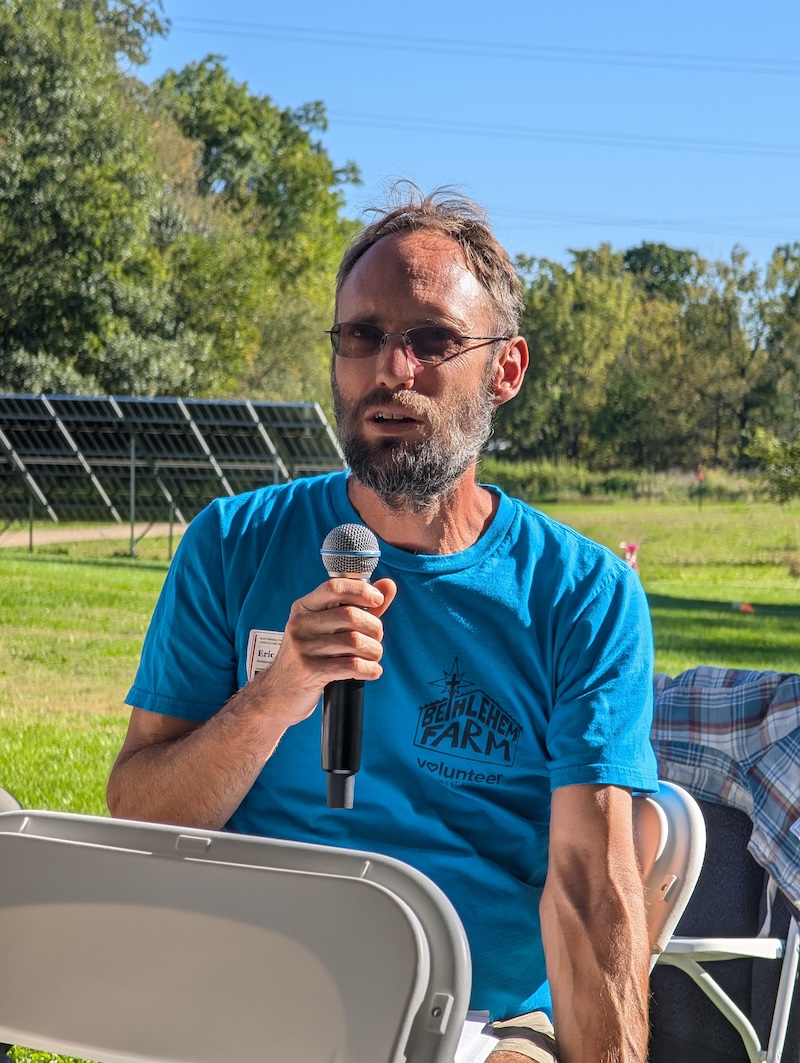
Eric Fitts describes Bethlehem Farm through prayer, community, simplicity, and service. Volunteers repair homes, garden, prepare food, and help shape the community’s prayers. The experience offers time away from devices and opportunities for direct relationships. Ordinary discoveries, such as digging a potato or seeing the Milky Way, can change how a person understands the world.
The discussion also recognizes shortages of labor, financial pressure, administrative delays, and exhaustion. Prayer is described in different ways: asking for provision, sitting with uncertainty, listening, expressing gratitude, and remaining open to an unexpected direction. The panel does not offer a single formula for faithful farming. It shows how conviction can be practiced through attention to people, land, work, and the limits of what one can control.
Selected figures from the session
- About 1,400-1,500 acres and 60 dairy cows: Reported scale of the Landis family’s organic cropping and dairy operation, with a transition around 2006. 6:34
- 14-18 weeks per year: Bethlehem Farm’s reported frequency of hosting service groups. 20:44
- About 250 produce boxes per month: Fresh RX distribution through local health clinics described by Jackson. 29:37
Words from the session
“Why aren’t more farmers doing this?”
“we don’t mourn what we don’t love.”
“We have very quiet neighbors.”
A moment of humor
Steve Graham describes exceptionally quiet neighbors beside his farm and explains that the adjoining property is a cemetery. Later, the prayer discussion becomes very practical when it turns to misplaced tools.
Questions for discussion
- Which daily practice makes our convictions visible to others?
- How can shared work create space for listening, gratitude, and meaningful participation?
Putting the discussion into practice
Look at the ordinary rhythms of an organization. Meals, work, welcome, teaching, and prayer can help connect its stated values with the way people experience it.
Saturday, October 3 · 9:30-11:00 am
Young Women on Food Access, Work, and the Future of Farming
Esther Himbosa · University of Basel | Christina Ding · Wheaton College | Fiona · Bethany Land Institute | Camille Walker · The Talking Farm
The panel begins with a question that runs through all four accounts: how can a person support good farming when money, land, time, or infrastructure limits the choices available? The speakers approach that question as a consumer and student, a business student, an agricultural practitioner in Uganda, and an urban farmer near Chicago.
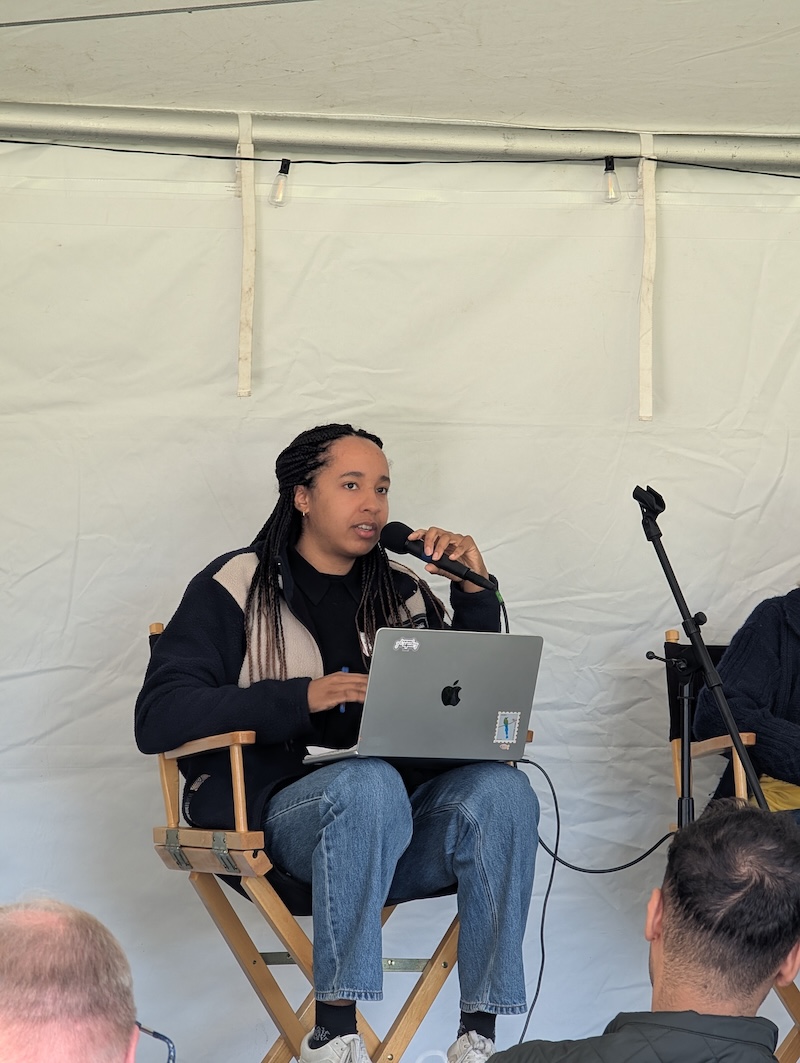
Esther describes buying food on a student budget in Switzerland. Local production, organic methods, and affordability do not always coincide. Shopping across the German border can make some food more affordable, while highlighting reliance on international systems. Her account of an international church gathering also shows how difficult sustainability conversations can become when a congregation includes people with different farming practices and political commitments.
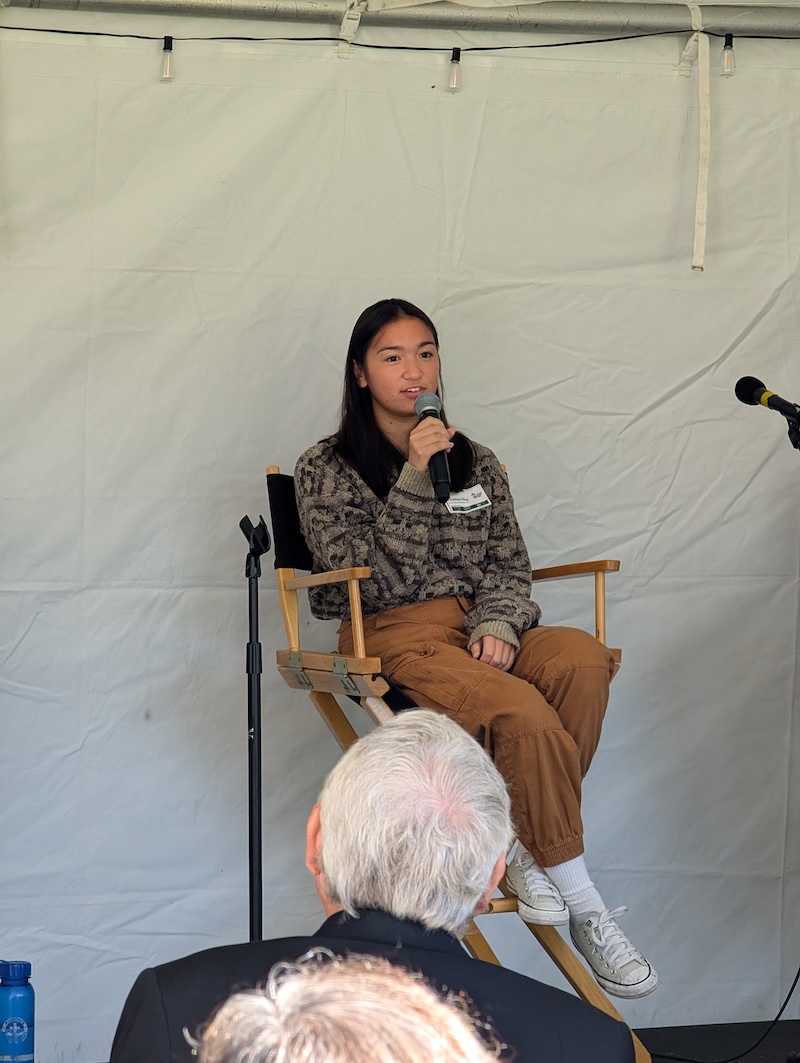
Christina describes discovering that people can help rebuild soil and then seeing those ideas in practice at Hungry World Farm and Bethany Land Institute. Her business training leads her to consider the infrastructure around farming. Processing, distribution, investment, and market access influence whether producers can sustain their work. Supporting regenerative agriculture can involve building useful businesses and services as well as cultivating land.
Fiona traces her path from growing up in Kampala through forestry and agroforestry to an 11-month placement at Hungry World Farm. Seeing productive crops grown without the spraying she expected challenged her assumptions. Back in Uganda, she needed practices suited to local crops, climate, labor, and resources. Bethany Land Institute provided a setting for that learning and for cooperation among people of different faiths.
She describes insecure access to land, particularly for women, and the difficulty of investing in borrowed property. Capital, skilled labor, storage, and processing are also barriers. Her ambition is to make healthy food accessible to poorer people. In the discussion, she explains how labor costs and limited machinery can make chemical use an economically attractive choice. The account calls for understanding the conditions that shape farm decisions.
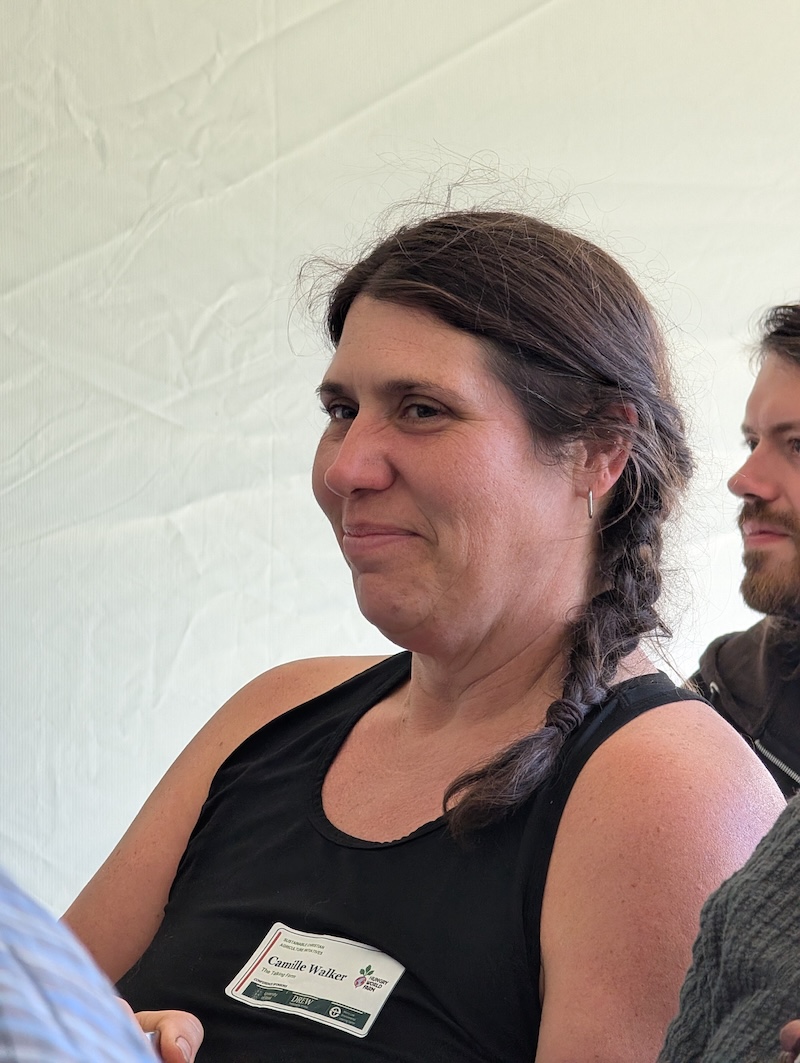
Camille Walker describes the pleasure of physical work, seasonal rhythm, and eating food she has grown. She also raises questions about leadership, motherhood, and preserving workers’ bodies. Making a harvest easier is a way to care for colleagues. The discussion acknowledges that production targets and payroll can make accessibility difficult. Sliding-scale purchasing, relationships with congregations, and opportunities for children are considered as ways to widen participation.
Selected figures from the session
- Around 40 students per semester: Bethany Land Institute training capacity as Fiona describes it. 41:57
- Eight months versus one to two weeks: Sweet-potato storage comparison between US experience and Fiona’s context; a personal example rather than a national limit. 46:33
- About 25,000 pounds of food per year: Camille’s description of The Talking Farm: a three-acre site with two acres in production, a 100-member CSA, and two weekly markets. 49:05
Words from the session
“local and organic is for me not affordable.”
“we only get one body”
“two very spoiled barn cats”
A moment of humor
At 31:20, Fiona jokes that her initial dislike of forestry remains visible in her first-semester transcript. Camille’s introduction finds a humorous substitute for the livestock that zoning rules prohibit.
Questions for discussion
- What prevents people in our community from participating as growers or eaters?
- Which change in processing, purchasing, or daily work would make farming more accessible?
Putting the discussion into practice
Invest in the infrastructure and working conditions around farming. People need ways to earn a living, obtain good food, and contribute without exhausting their bodies or families.
Saturday, October 3 · 4:15-6:15 pm
Building a Useful Network for Christian Agricultural Initiatives
Facilitated by Julius Malin · Contributions from conference participants
Organizations working in sustainable Christian agriculture may need one another most when they have the least time to meet. The workshop begins with that capacity problem. Harvests, staffing shortages, and the demands of daily work can prevent people from attending events that might help them.
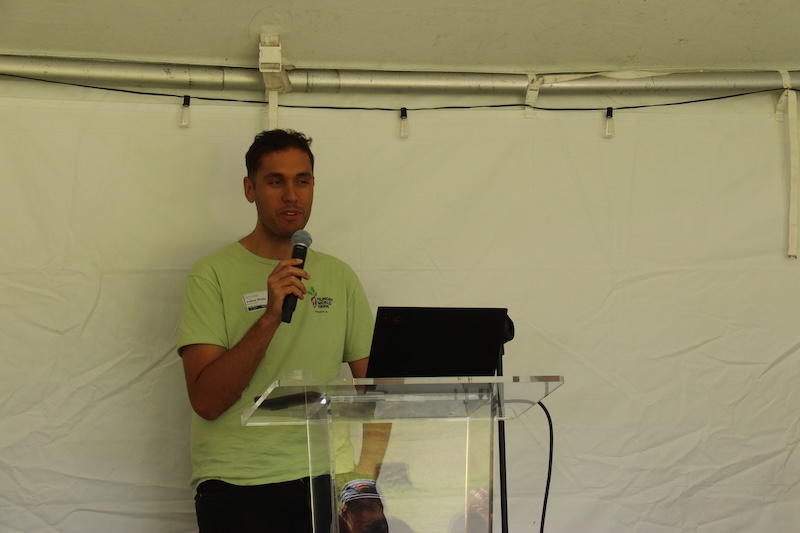
The facilitator proposes reaching organizations where they are. Regional ambassadors could visit farms and connect people with useful opportunities. Regular conversations and a shared forum could help circulate questions and experience. Longer-term possibilities include a rotating pool of skilled labor, educational resources, and financial support. These are proposals for development, rather than descriptions of an operating network.
The group conversations make the cost of volunteering visible. A visiting group may contribute important work, but hosting also requires meals, orientation, supervision, and planning. Good intentions alone do not ensure that an organization receives help. Longer stays, preparation, and clearer matching between people and tasks could make service more useful.
Participants identify resources already present: land, teaching programs, experienced workers, congregational relationships, and people seeking meaningful service. Young adults and retired volunteers may have different needs and availability. A network could help organizations describe what they can offer as well as what they lack.
The plenary distinguishes two kinds of exchange. Relationships develop through time and trust. Practical answers may need to arrive quickly, when a farmer faces a specific problem. Proposed online formats include groups, moderated forums, and a system that connects questions with people who have relevant experience. A host who makes introductions and invites responses can be as important as the platform.
Participants also consider local, regional, and national layers. Soil, weather, and proximity matter for some questions, while others benefit from a wider pool of experience. Existing sustainable-agriculture organizations may offer useful relationships and resources. The workshop ends with further conversation ahead. Its immediate lesson is to begin with a service that saves people time or helps them solve a problem, then build the network around that value.
Selected figures from the session
- Monthly exchange: Suggested frequency of online conversations; a proposal rather than an established service. 3:12
- Up to about 30 volunteers at a time: Volunteer-group size described by one participant, with individual summer placements ranging from two weeks to three months. 16:42
Words from the session
“What do we already possess?”
“We’re all trying to farm on the same planet.”
“I haven’t built it yet.”
A moment of humor
A discussion of website-building skills prompts a participant to point out that the website has not actually been built. Earlier, birds spreading mulberry seeds illustrate the practical questions an electronic farmers’ coffee shop might address.
Questions for discussion
- What could a network do that would make participation worth our limited time?
- What useful skill, resource, or introduction could we offer another organization?
Putting the discussion into practice
Start with a concrete benefit and a manageable commitment. Shared capacity grows when participants can give and receive help without creating another burden.
Sunday, October 4 · Closing worship at Willow Springs Mennonite Church
God’s Good Word Grows: Natalie Nyberg’s Closing Sermon
Natalie Nyberg · Luke 8:4-15
Listen to Natalie’s sermon · 23 minutes 50 seconds
Sermon-only excerpt from the October 4 worship recording, shared by Willow Springs Mennonite Church.
The conference’s final morning brought participants to Willow Springs Mennonite Church for worship and Natalie Nyberg’s sermon, “God’s Good Word Grows.” Preaching from Luke 8:4-15, the parable of the sower, Nyberg connected the conference’s attention to land and cultivation with the care of the spiritual life. World Communion Sunday and the feast of St. Francis of Assisi framed the service around Christian unity, generosity, and kinship with creation.
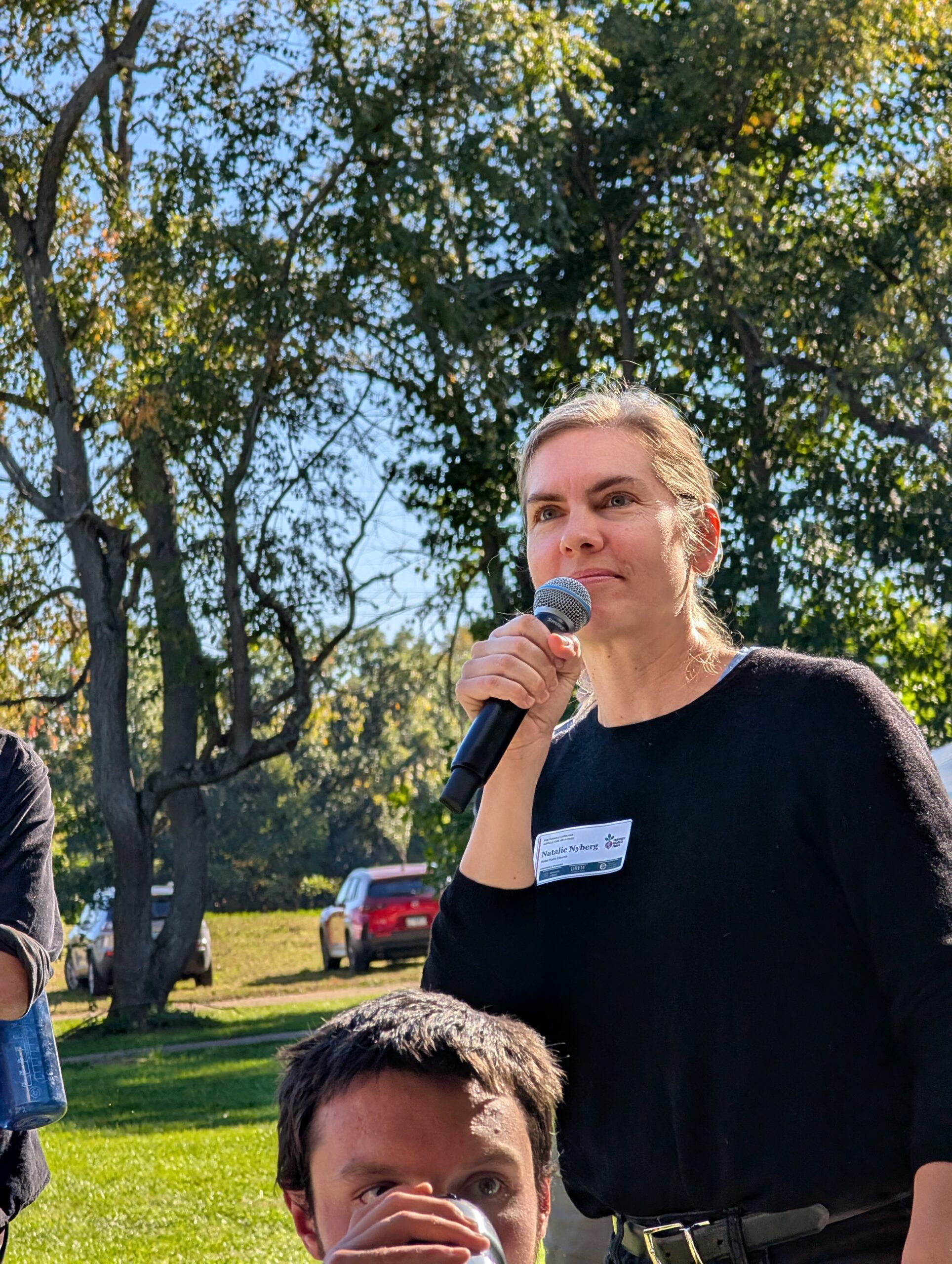
Nyberg begins with the sower’s surprising generosity. As a gardener, she carefully prepares beds and guards the few seeds in each packet. Jesus’s sower does the opposite, scattering seed even on paths, rocks, and thorny ground. She reads this abundance as an image of God’s goodness, shared widely rather than reserved for those most likely to respond. The invitation extends to believers: we, too, can sow goodness generously without controlling where it takes root.
The seed is the word of God, which Nyberg understands as more than words printed on a page. Drawing on the language of scripture, she describes it as living, creative, nourishing, and capable of inspiring new ways of life. Reading the Bible matters, but the life it points toward also takes shape through prayer, service, worship, fellowship, and attention to the world around us.
The different soils name real obstacles to that growth. Accusations of inadequacy, hard circumstances, relentless exposure to outrage and despair, and attachment to comfort can weaken hope and crowd out a person’s calling. Nyberg speaks candidly about feeling that everything depends on getting herself together. Jesus’s parable, in her reading, acknowledges these pressures while inviting honest, patient care for what is growing within us.
Healthy soil offers her a way to think about spiritual formation. Just as many forms of life work together beneath the ground, a varied set of spiritual practices can nurture a person’s capacity to respond to God. Alongside traditional disciplines such as silence, study, prayer, and service, she names spiritual direction, centering prayer, and attention to nature. She presents the comparison as a working hypothesis: a richer spiritual ecosystem can help sustain the care and healing people hope to bring into the world.
St. Francis supplies a recurring example of goodness taking root in a particular life. Nyberg recalls his simplicity, delight in creation, service to excluded people, and willingness to cross lines of hostility. His practices flowed from his personality and relationships rather than a single prescribed picture of religious life. The sermon closes by asking whether we will offer God’s good word the fertile ground and patient attention it needs to grow through us.
“God’s goodness grows.”
Natalie Nyberg · approximately 2:38 in the sermon audio
A moment of humor
Nyberg contrasts the sower’s openhanded approach with her own nervous supervision of children planting precious seeds. Later, she admits that bleakness can feel particularly persuasive in February. Both moments give the sermon’s call to patience and trust an everyday setting.
Questions for reflection
- Which practices help us remain rooted in goodness when the needs around us feel overwhelming?
- Where could we share care more generously, without needing to control the outcome?
Keeping the Network Growing
We hope the relationships begun at SCAI will continue to grow into an ongoing network among Christian agricultural initiatives and farms. Across different places and traditions, we share a desire to care for creation, grow nourishing food, and strengthen our communities.
Staying connected can help us share practical knowledge, learn from one another’s experiments, exchange resources, and encourage each other through the challenges of this work. We hope to make room for continued conversations, farm visits, and collaboration shaped by the needs and gifts of the people involved.
The conference was a beginning. Our hope is to keep learning together and to help these relationships take root through the seasons ahead.